
Eucalyptus, Monterey pine and why Bay Area caps clog early
Eucalyptus trees, planted across the Bay Area by the thousands starting in the early 1900s, shed leathery, resinous debris essentially year-round — a genuinely regional chimney-cap problem most of the country never deals with. Here is the mechanism and the fix.
Published
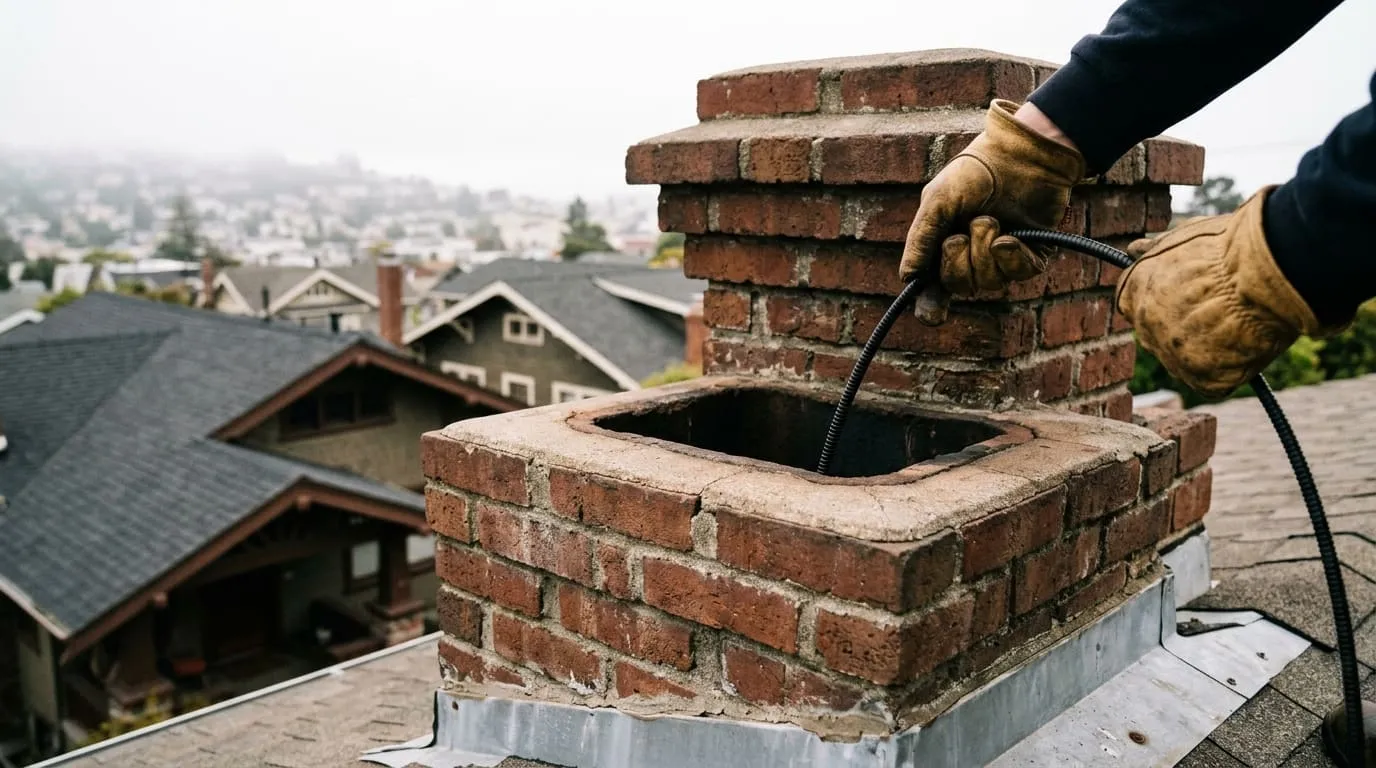
Most of the country deals with chimney-cap debris as a seasonal problem — leaves fall in autumn, clog a cap over a few weeks, and then the tree goes bare and the problem stops until next year. The Bay Area’s most common large trees do not work that way, and the resulting debris pattern is different enough from the seasonal-leaf-litter model that it is worth understanding on its own terms.
Why eucalyptus is everywhere in the first place
Eucalyptus is not native to California, but it is now one of the most visually defining trees across the Bay Area’s hillsides, from the Presidio and much of San Francisco’s park system to the dense eucalyptus groves covering large sections of the Oakland and Berkeley hills. Most of that planting dates to a deliberate boom in the late 1800s and early 1900s, when eucalyptus was promoted — somewhat optimistically, as it turned out — as a fast-growing source of hardwood timber and windbreak plantings. The timber plan mostly failed, since the particular species planted here does not mill the way it was hoped, but the trees themselves stayed, grew immensely tall, and now shape whole hillsides across the region.
Why eucalyptus sheds differently than a deciduous tree
A classic deciduous tree — an oak, a maple, most of what generates the “leaf season” idea most Americans grow up with — drops essentially all of its leaves in a concentrated autumn window, then stands bare through winter, meaning a chimney cap under it gets one intense debris season and then a long clear stretch. Eucalyptus does not follow that pattern. It sheds leaves, bark strips and seed pods more or less continuously throughout the year, with the added complication that its leaves and bark carry a genuinely resinous, oily quality that makes the debris sticky and slower to simply blow away once it lands. A cap under or near a mature eucalyptus can accumulate debris steadily, month after month, rather than in one manageable seasonal event.
Monterey pine adds a second, similar problem
Monterey pine, another tree planted extensively across the Bay Area — again mostly starting in the late 1800s and early 1900s, and again now far more common here through cultivation than in its small native range further down the coast — compounds the issue in many neighborhoods. Pine needles and small cones shed steadily rather than seasonally, and pine sap adds its own sticky residue to whatever accumulates on a cap or in a gutter nearby. A property with both eucalyptus and pine nearby, common in many hillside East Bay neighborhoods, effectively never gets a real break from falling debris.
What clogged debris actually does to a cap
A chimney cap’s mesh spark-arrestor screen is sized to a specific opening — typically in the range of three-eighths to one-half of an inch — precisely calibrated to block embers while still letting the flue draw properly. Sticky eucalyptus or pine debris accumulating on that mesh does two things at once: it restricts airflow, which can affect how well a fire draws, and it adds combustible material sitting directly on top of a component whose entire job is fire safety. A heavily clogged cap is, ironically, working against the very purpose it was installed for.
The dried debris also matters for wildfire risk, not just the cap
Eucalyptus leaf litter and bark, once they dry out on a roof or gather at the base of a chimney chase, are exactly the kind of fine fuel that California’s wildfire-defensible-space rules are aimed at clearing. A homeowner focused only on a chimney cap can miss that the same tree dropping debris onto the cap is often dropping an equal amount onto the roof and gutters around it, and clearing a roof of dried eucalyptus litter is a standing recommendation independent of anything to do with the chimney specifically. The two problems — a clogged cap and a fuel-loaded roof — usually get noticed and addressed together, since they come from the same source.
Why this shows up more in some neighborhoods than others
Debris load correlates directly with proximity to mature eucalyptus or pine stands rather than with any particular city boundary. Properties near the Presidio, along the Oakland and Berkeley hills’ wooded slopes, or anywhere backing onto a significant stand of either tree see this far more than a property in a more open, less tree-dense part of the service area. This is part of why a cap recommendation is never one-size-fits-all across our whole twenty-mile radius — a property under heavy eucalyptus canopy genuinely needs a different maintenance interval, and sometimes a different cap design, than one with minimal tree cover nearby.
What actually helps
A properly sized, well-sealed cap with the correct mesh spacing is the first line of defense regardless of tree exposure, but a property under heavy eucalyptus or pine canopy benefits from a shorter inspection interval specifically to check and clear the cap before buildup becomes severe enough to restrict draft meaningfully. There is no cap design that eliminates the debris problem entirely under a mature eucalyptus canopy — the practical answer is regular clearing as routine maintenance, the same conclusion any experienced Bay Area chimney technician reaches once they have serviced enough hillside properties to see the pattern clearly.
Booking a check under heavy tree cover
If your property sits near mature eucalyptus, Monterey pine, or both, and it has been more than a year since your cap was actually opened up and checked rather than just glanced at from the ground, that is worth doing before debris buildup becomes a draft problem. We work across a twenty-mile radius from central San Francisco, covering both the coastal fog belt and the wooded East Bay hills.
Read next
More from the blog
Spark arrestor rules in wildfire-era California
A spark arrestor is not a decorative extra on a California chimney — it is a fire-code requirement with specific mesh and sizing rules, sharpened further in Wildland-Urban Interface areas. Here is what the code actually says.
When chimney work in San Francisco needs a permit
San Francisco’s Department of Building Inspection does not require a permit for straightforward repointing, but the line moves fast once a repair touches structural framing or seismic bracing. Here is what actually triggers one.
What San Francisco’s fog actually does to a chimney
A San Francisco chimney can corrode and crack on a week with zero measurable rainfall, because the coastal fog rolling through the Golden Gate behaves nothing like a rainstorm. Here is why fog-hours matter more than rain totals, and where to look first.
Get your cap checked and cleared
We open the cap up and check it directly rather than judging from the ground.