Chimney inspection · San Francisco

Chimney inspection in San Francisco

Not sure which level of inspection I actually need, or whether one is even worth it.

No obligation. Call and we’ll confirm when we can come by.

  • The level is confirmed with you before the visit — sale, routine or post-event.
  • A written report, with photos or video footage for a Level 2 or 3.
  • Clear access to the firebox and, ideally, the roof or attic if either level needs it.
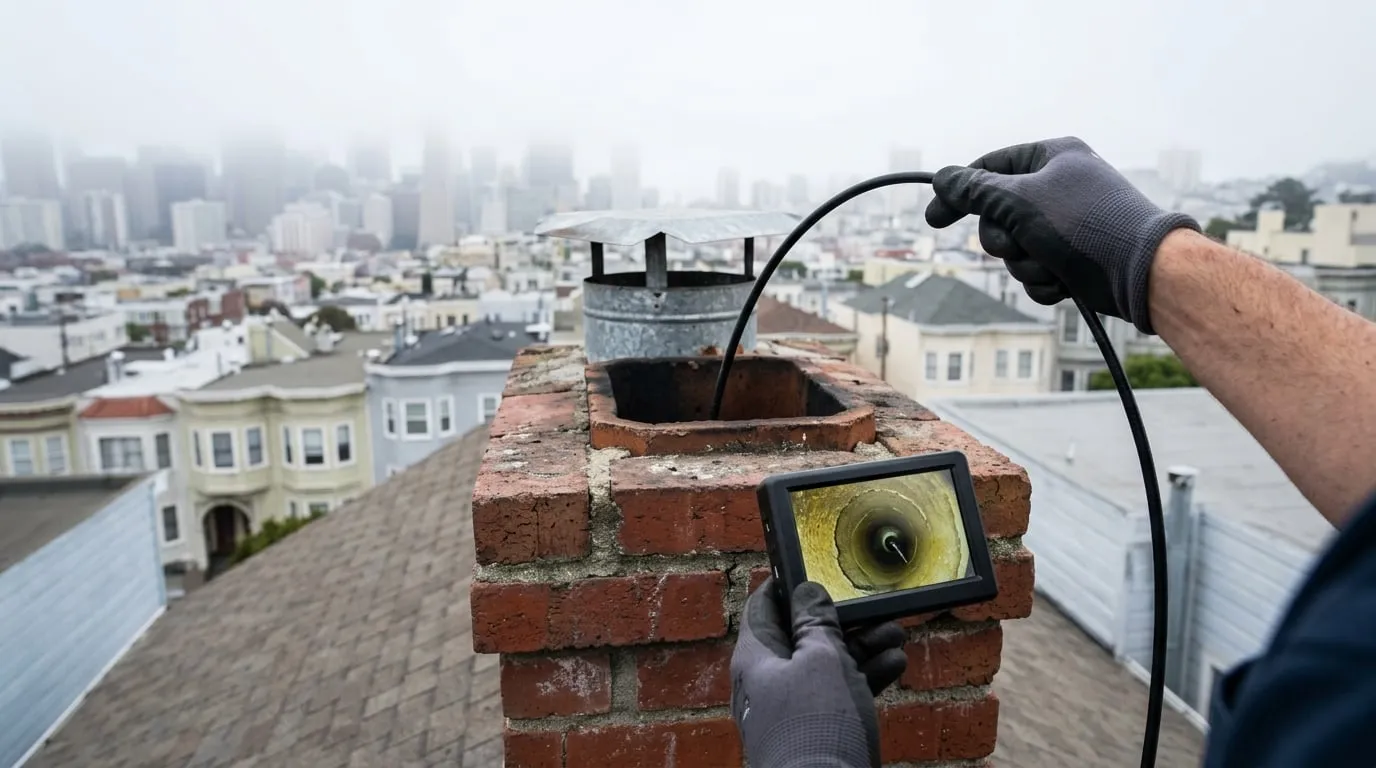
An inspection camera on a flexible rod being fed into a chimney flue in a San Francisco home, monitor screen visible

What an inspection covers

What each level actually checks

Crown, mortar, flashing and liner — traced against the same cutaway every service on this site uses.

The short answer

A chimney inspection is a condition review, and NFPA 211 defines three levels of it — not one generic check. A Level 1 inspection covers what is visible without a camera or a ladder, appropriate for a chimney under continued, ordinary use. A Level 2 adds a video-camera pass through the flue and is what most home sales, refinances and insurance renewals in San Francisco actually require, since it can confirm the liner’s condition without demolition. A Level 3 goes further still, potentially removing portions of a chimney or wall to examine a suspected problem directly, and it is the level NFPA 211 calls for after an event — an earthquake, a chimney fire, storm damage — that may have compromised a chimney that looked fine before it. We tell you plainly which level actually fits your situation rather than defaulting to whichever is easiest to sell.

Cutaway of a masonry chimney: the cap and spark arrestor at the top, then the crown, the flue liner running down inside the brickwork, the mortar joints, the flashing where the stack meets the roof, the smoke chamber, and the firebox down at the hearth.01020304050607
  1. 01Cap and spark arrestor Keeps fog drip, eucalyptus debris and nesting birds out of the flue. California’s fire code sets the minimum mesh spacing for the spark-arrestor screen.
  2. 02Crown The sloped slab across the top. Coastal fog settles on it for hours at a time even on a rainless day, and that standing moisture is what opens the first crack.
  3. 03Flue liner The passage the smoke leaves by. A break in it is a safety fault, not a maintenance item.
  4. 04Mortar joints In an unreinforced pre-1940s stack this is also where a shaking chimney tends to shear first — a fact tied directly to the Bay Area’s earthquake risk, not just to age.
  5. 05Flashing The seam between stack and roof. On an older Bay Area home this seam has usually been re-tarred more than once, and a bad reseal is a common source of a slow ceiling stain.
  6. 06Smoke chamber The shelf a flue brush never reaches. When a house smells of last winter, this is usually where it is coming from.
  7. 07Firebox The only part of the whole system most people ever see — and the last place a problem turns up.

Book this if you noticed

The usual reasons to call

  • You are buying or selling a home and need a report for the transaction.
  • An earthquake, storm or chimney fire happened and nothing looks obviously wrong.
  • You are switching from wood to gas, or installing a new insert or liner.
  • The chimney has not been inspected in more than a year, or ever, since you moved in.

Not sure which level you need? Call (628) 245-1261 and describe your situation — we will confirm the right one.

What is included

The inspection, scoped plainly

Included

  • Confirmation of the correct NFPA 211 level for your situation
  • A full visual check of every accessible component
  • Video camera documentation of the flue interior on a Level 2 or 3
  • A written report suitable for a sale, refinance or insurance file

Not included

  • Any repair work the inspection identifies, quoted and scheduled separately
  • Structural or engineering certification beyond the chimney itself, referred to a licensed engineer if needed

Any repair the inspection identifies is a separate service, quoted on its own so an inspection never turns into a surprise bill.

The visit

How an inspection actually goes

  1. 1

    Confirm the right level

    We ask why you need the inspection — routine, transaction or post-event — and confirm which NFPA level actually applies before starting.

  2. 2

    Exterior and accessible interior check

    The crown, flashing, cap, firebox and accessible flue get a direct visual check, covered on every level.

  3. 3

    Camera pass, if Level 2 or 3

    A video camera runs the length of the flue, recording the liner’s condition frame by frame where the eye cannot reach.

  4. 4

    Component review, if Level 3

    If damage is suspected, portions of the chimney or an adjacent wall may be opened to confirm what the camera alone cannot show.

  5. 5

    Written report with evidence

    You receive a written report, with photos or saved video footage for a Level 2 or 3 — the kind a lender, buyer or insurer can actually read.

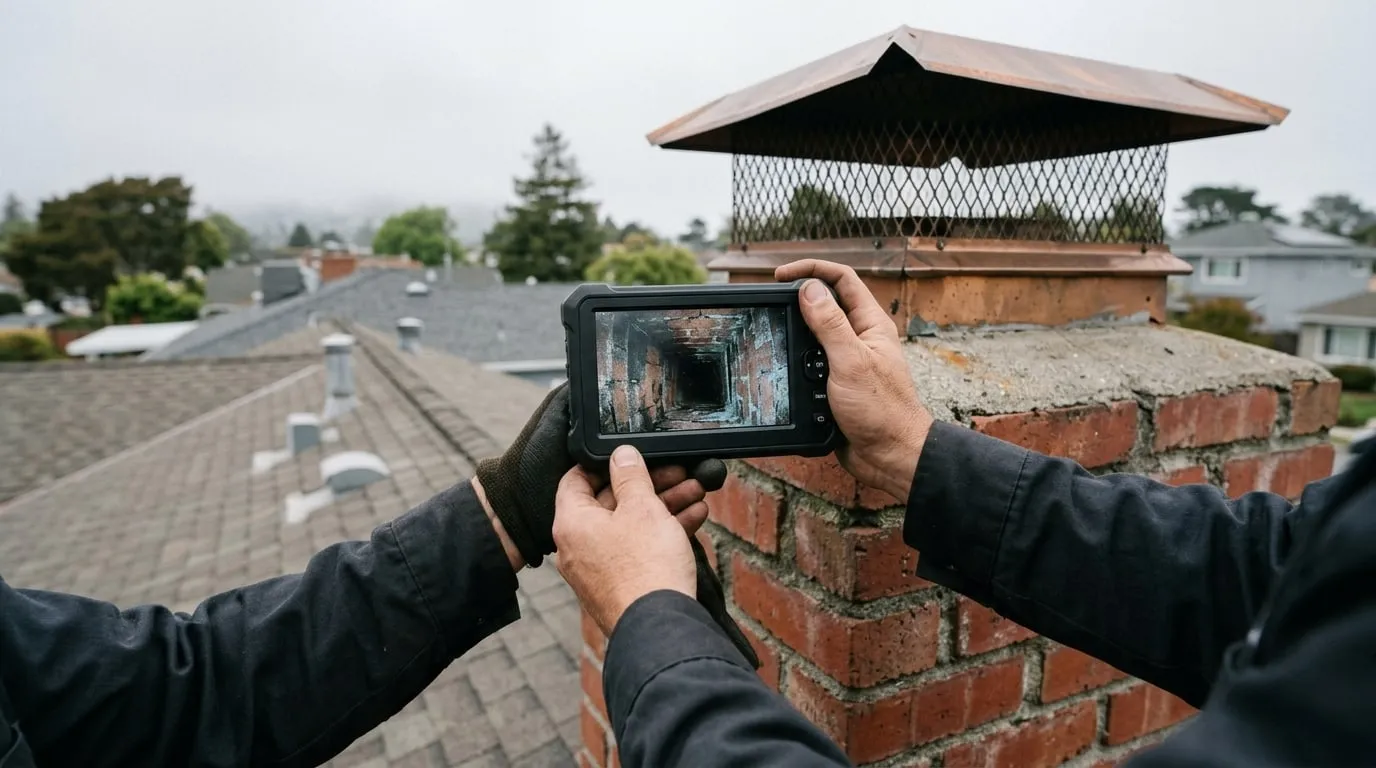
A technician viewing a live camera feed on a monitor while inspecting the inside of a chimney flue

Inspection levels

Inspection levels, by NFPA 211

The three levels the standard actually defines, and when each one applies — not a number we picked.

Level 1
Visible, accessible areas — routine, continued use
Level 2
Adds video camera — sale, refinance, insurance, after an appliance change
Level 3
May remove components — after damage or a suspected hidden hazard
Recommended after
Any earthquake, chimney fire, or severe storm
Typical Level 2 duration
60–90 minutes

NFPA 211: Standard for Chimneys, Fireplaces, Vents, and Solid Fuel-Burning Appliances.

In detail

Why San Francisco leans on Level 2

Why a real-estate transaction, a refinance or a post-earthquake check each call for a different depth of review.

01Three levels, not one generic check

“Chimney inspection” gets used as if it means one thing, and NFPA 211 — the standard the whole industry actually works from — defines three distinct levels instead, each meant for a different situation.

Continue reading

A Level 1 is the baseline: a visual check of everything reachable without a camera or a ladder, right for a chimney that has been used continuously with no recent changes and nothing suspicious reported. A Level 2 adds a video-camera pass down the full length of the flue, documenting the liner’s condition in a way a flashlight and a mirror cannot. A Level 3 goes further still, potentially opening up sections of the chimney or an adjacent wall to examine a specific suspected problem directly, and it is reserved for situations where something concrete points to hidden damage.

Confusing these three, or defaulting to whichever sounds simplest, is how a buyer ends up with an inspection report a lender will not accept, or a homeowner skips a genuinely necessary Level 3 after real damage because a Level 1 looked fine from the ground.

02Why San Francisco real estate leans on Level 2

San Francisco’s real-estate market moves fast, and a chimney inspection is a routine part of due diligence on almost any older home with a fireplace — which describes a large share of the city’s housing stock.

Continue reading

What a transaction actually needs is documentation a third party can trust without opening up the chimney themselves: a recorded camera pass through the flue, showing the liner’s actual condition, backed by a written report. That is precisely what a Level 2 inspection produces, and it is why it has effectively become the standard for a sale, a refinance, or an insurance renewal here, even when the chimney shows no obvious symptoms at all.

03After an earthquake, the standard calls for more

NFPA 211 is specific about this: after an event that might have compromised a chimney’s structural integrity — an earthquake, a chimney fire, severe storm damage — the appropriate response is a Level 3 inspection, not a Level 1 or 2.

Continue reading

That distinction exists because the kind of damage an earthquake can cause to a masonry chimney — a hairline crack in the mortar joints, a shift in how the structure ties to the surrounding framing — is often invisible from a purely visual check, and even a camera run down the flue interior will not reveal a problem sitting in the wall around it. A Level 3, which may involve opening a portion of the chimney or an adjacent wall to look directly, is the level built for exactly that situation.

04What the report actually contains

Every inspection ends the same way regardless of level: a written report you actually keep, not a verbal summary given at the door.

Continue reading

For a Level 1, that means a clear account of what was checked and what was found. For a Level 2 or 3, it includes photographs or saved video footage from the camera pass — documentation specific enough that a buyer’s agent, a lender or an insurance adjuster can review it independently, without needing to trust a summary secondhand.

05Booking an inspection in San Francisco and the Bay Area

Tell us why you need the inspection — a pending sale, a recent earthquake or storm, an appliance change, or simply because it has been a long time — and we will confirm the right level before scheduling anything.

Continue reading

We work across a twenty-mile radius from central San Francisco, and the report you get is built to be useful to whoever actually needs to read it.

Reviews

What the last 17 customers actually said

5.0

17 Google reviewscounted 2026-08-26

  • 517
  • 40
  • 30
  • 20
  • 10
  • Jennifer Garcia

    Heavy Stage 3 creosote had built up within an inadequately sized flue pipe, but a vigilant technician cleaned it away, preventing catastrophic fire dangers.
  • Miguel Reynolds

    Last winter we got a weird burning smell every time we used the fireplace. They cleaned a thick coating of soft creosote from the higher tiles and the stench is completely gone now.
  • Leonardo Madden

    Most sweepers only glance up with a flashlight. This team established a thorough monitor and pointed out minor gaps in the mortar parging, and brushed the smoke chamber till it appeared brand new.
  • Rhiannon Wimer

    Punctual, polite, and thoroughly professional. They treat your home with total respect and deliver world-class service every single time.

Read all 17 reviews on Google

Questions

What people ask about inspections

What level of inspection do I need to sell my San Francisco home?

Most transactions ask for a Level 2, which adds a video-camera pass through the flue — the kind of documentation a buyer’s inspector or lender can actually review without opening up the chimney.

Should I get an inspection after an earthquake?

A visible crack or lean is worth a call regardless, and NFPA 211 specifically calls for a Level 3 inspection — the most thorough kind — after an event like an earthquake that may have compromised a chimney that looked fine before it.

How long does a Level 2 inspection take?

Typically 60 to 90 minutes for a single flue, including the camera pass and the written report — longer if the property has more than one chimney or unusually limited access.

Is a Level 1 inspection enough for a chimney I use every winter?

For a chimney under continued, ordinary use with no recent damage or appliance change, yes — it is the level bundled into every standard sweep visit.

Do I need an inspection before switching from wood to a gas insert?

Yes — an appliance change is one of the specific situations NFPA 211 calls for a Level 2 inspection, since a gas insert has different venting requirements than the wood-burning setup the flue may have been sized for.

Book an inspection

Tell us why you need it — a sale, an earthquake, or just peace of mind — and we will confirm the right level.

Or call (628) 245-1261 to book directly.

Tell us what changed.

Tell us what the fireplace is doing and what changed. Someone reads every message that comes in.

No obligation. Call and we’ll confirm when we can come by.

Prefer to talk? Call (628) 245-1261 — we’ll confirm when we can help.