Chimney sweep · San Francisco

Chimney sweep in San Francisco

Worried a sweep just means a mess and an upsell — not this time.

No obligation. Call and we’ll confirm when we can come by.

  • About an hour, start to finish, for a typical single-flue fireplace.
  • A swept flue and a written note of anything the inspection turned up.
  • Clear access to the firebox and, if it exists, the attic access point.
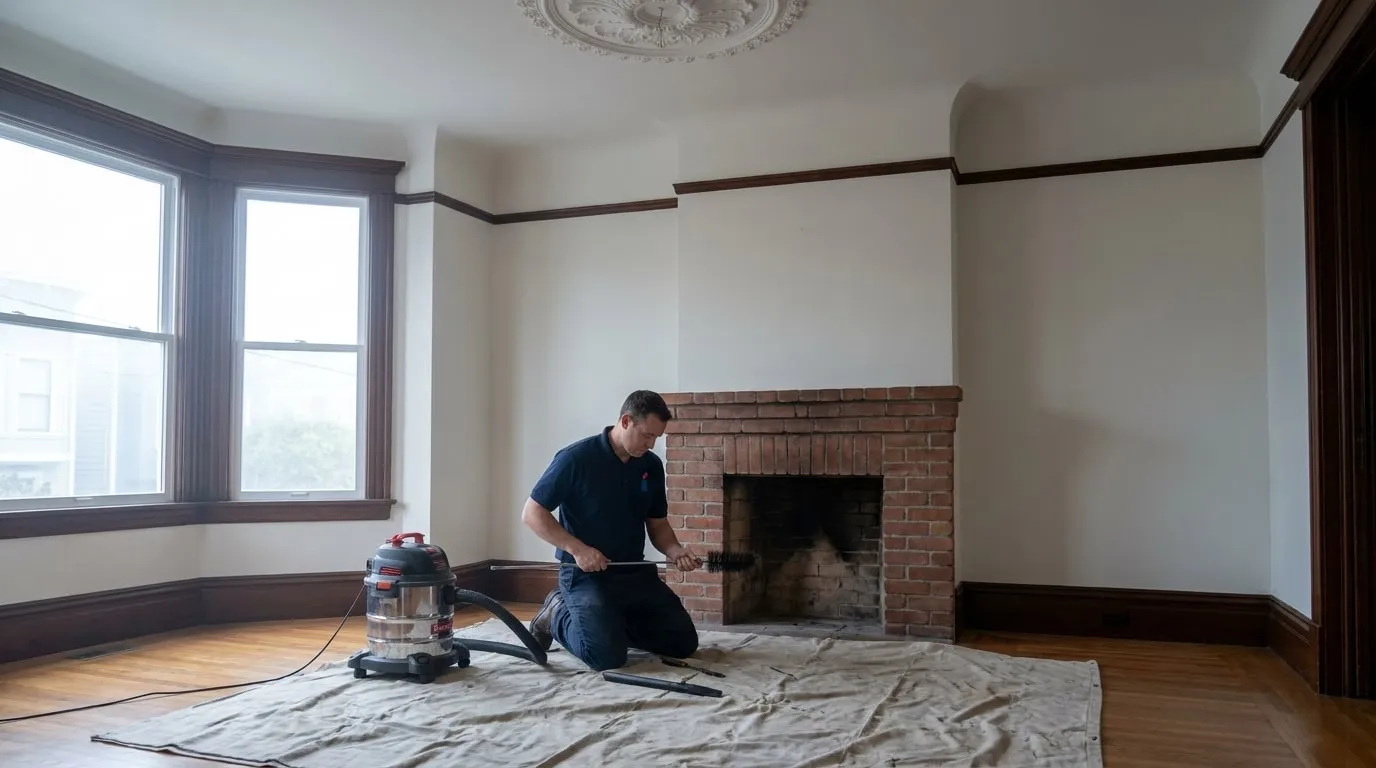
A technician in a navy polo kneeling at a brick firebox in a San Francisco Victorian rowhouse living room with drop cloths laid over the floor

What a sweep covers

Where the brush actually goes

The flue and the smoke chamber it feeds — traced against the same cutaway every service on this site uses.

The short answer

A chimney sweep is the yearly clearing of creosote and soot from the flue, done with rotary or push-rod brushes sized to the liner, followed by a Level 1 inspection of everything you can reach without a camera or a ladder. In San Francisco, where a fireplace often sees only occasional use across a mild but genuinely damp season, creosote can build up more slowly than it would in a colder climate — which is exactly why owners underestimate how long it has been since the last sweep. That annual pass is what keeps a flue from building enough creosote to catch fire, and it is the same visit where a technician catches a cracked crown, fog-driven mortar wear, or a loose cap before any of it turns into a repair. We protect the floor and hearth, run the brush the full length of the liner, and vacuum the firebox and smoke shelf clean before we leave.

Cutaway of a masonry chimney: the cap and spark arrestor at the top, then the crown, the flue liner running down inside the brickwork, the mortar joints, the flashing where the stack meets the roof, the smoke chamber, and the firebox down at the hearth.01020304050607
  1. 01Cap and spark arrestor Keeps fog drip, eucalyptus debris and nesting birds out of the flue. California’s fire code sets the minimum mesh spacing for the spark-arrestor screen.
  2. 02Crown The sloped slab across the top. Coastal fog settles on it for hours at a time even on a rainless day, and that standing moisture is what opens the first crack.
  3. 03Flue liner The passage the smoke leaves by. A break in it is a safety fault, not a maintenance item.
  4. 04Mortar joints In an unreinforced pre-1940s stack this is also where a shaking chimney tends to shear first — a fact tied directly to the Bay Area’s earthquake risk, not just to age.
  5. 05Flashing The seam between stack and roof. On an older Bay Area home this seam has usually been re-tarred more than once, and a bad reseal is a common source of a slow ceiling stain.
  6. 06Smoke chamber The shelf a flue brush never reaches. When a house smells of last winter, this is usually where it is coming from.
  7. 07Firebox The only part of the whole system most people ever see — and the last place a problem turns up.

Book this if you noticed

The usual signs

  • A burning or campfire smell that lingers in the room after the fire is out.
  • Visible black flakes or soot dropping into the firebox on their own.
  • It has been more than a year — or you are not sure when — since the last sweep.
  • Smoke drifting back into the room instead of drawing up the flue.

Not sure it is a sweep you need? Call (628) 245-1261 and describe it — we will point you to the right service.

What is included

The sweep, scoped plainly

Included

  • A full-length brush pass through the flue liner
  • Sealed vacuum extraction of loosened creosote and soot
  • An NFPA 211 Level 1 inspection of accessible components
  • Floor and hearth protection for the whole visit
  • A written note of anything found, before we leave

Not included

  • Camera inspection of concealed sections — that is a Level 2 inspection, booked separately
  • Masonry repair, crown work or cap replacement, quoted as its own job if the sweep finds it

A camera inspection and any repair work are separate services, quoted on their own so a sweep never turns into a surprise bill.

The visit

How a sweep actually goes

  1. 1

    Floor and hearth protection

    Drop cloths go down before anything else, from the firebox opening to the nearest clear walking path.

  2. 2

    Brush the flue

    A rotary or push-rod brush sized to your liner runs its full length, top to bottom, breaking loose creosote and soot.

  3. 3

    Sealed vacuum extraction

    A HEPA-filtered vacuum stays sealed to the firebox opening the whole time, so the debris never reaches the room.

  4. 4

    Level 1 inspection

    Every accessible part of the flue, firebox and connection gets a visual check for cracks, gaps or wear.

  5. 5

    Written notes

    Anything the inspection found — even something minor — goes in writing before we leave, with no pressure to book it on the spot.

A technician in a navy polo kneeling at a brick firebox in a San Francisco Victorian rowhouse living room with drop cloths laid over the floor

Sweep specifications

Sweep, by the numbers

The figures a sweep is measured against — set by the inspection standard the industry actually uses, not a number we picked.

Inspection standard
NFPA 211, Level 1
Recommended frequency
Annually, with regular use
What gets brushed
Full length of the flue liner
Debris handling
Sealed vacuum extraction, floor protected
Typical visit length
45–75 minutes

NFPA 211: Standard for Chimneys, Fireplaces, Vents, and Solid Fuel-Burning Appliances.

In detail

What a sweep clears, and why it matters

The mechanics of creosote buildup, and why an annual pass is the single most effective thing an owner can do.

01What a sweep actually clears

Every fire leaves behind creosote — a tar-like residue that condenses on the inside of the flue as smoke cools on its way up.

Continue reading

A little of it is normal. Enough of it, built up over one or more seasons of occasional fires, is fuel sitting inside a chimney that occasionally sees temperatures hot enough to ignite it. A chimney sweep is the mechanical removal of that buildup: a brush sized to the exact diameter of the flue, run its full length from the firebox to the top of the liner, breaking the creosote and soot loose so it can be vacuumed out rather than left to accumulate visit after visit.

San Francisco’s mild climate means a lot of fireplaces here get lit occasionally through the cooler months rather than run daily the way a wood stove might elsewhere, and that occasional-use pattern is exactly what causes owners to underestimate how long it has actually been. Creosote does not need daily fires to accumulate to a dangerous level — it needs time, and an annual check is the only reliable way to know where a flue actually stands.

02Why the mess never reaches the room

The most common hesitation we hear is not about the work — it is about the soot.

Continue reading

A brush pass loosens built-up creosote inside a confined flue, and if that debris were simply left to fall, it would end up on the hearth, the rug and everything nearby. We do not work that way. Floor protection goes down before the first brush stroke, covering the hearth and the walking path to it, and a HEPA-filtered vacuum stays sealed against the firebox opening for the entire brushing pass, pulling debris out as it falls rather than letting it settle. The room you leave for the appointment is the room you come back to.

03The inspection that comes with it

A sweep on its own tells you the flue is clear. It does not, by itself, tell you the flue is safe — that is what the Level 1 inspection bundled into every sweep visit is for.

Continue reading

Defined by NFPA 211, a Level 1 inspection covers everything a technician can see and reach without a camera or a ladder to the roof: the readily accessible interior of the flue, the firebox, the smoke chamber immediately above it, and the connection between the appliance and the chimney. It is the right depth of check for a chimney under continued, ordinary use with no recent changes to the appliance or any reason to suspect hidden damage.

If that visual check turns up something the naked eye cannot fully explain — a crack that might run deeper than it looks, or damage after an earthquake or a hard winter storm — we say so plainly and point toward a Level 2 inspection with a video camera, rather than guessing at what a brush and a flashlight cannot show.

04What changes the visit, and what does not

A single-flue fireplace with reasonable access is the baseline job: roughly an hour, one technician, floor protection down the whole time.

Continue reading

A second flue, a wood stove with its own connector pipe, or a Victorian-era chimney with an unusually tall or narrow flue can extend that, and we will tell you before we start if the scope looks different from the baseline. What does not change is the sequence — protect, brush, extract, inspect, report — regardless of how many flues are on the property or how long since the last sweep.

05Booking a sweep in San Francisco and the Bay Area

We work across a twenty-mile radius from central San Francisco. Tell us the last time the chimney was serviced, if you know it, and whether you have noticed any smell, smoke or debris — that helps us plan for anything beyond the standard visit before we arrive, rather than discovering it on the ladder.

Reviews

What the last 17 customers actually said

5.0

17 Google reviewscounted 2026-08-26

  • 517
  • 40
  • 30
  • 20
  • 10
  • Jennifer Garcia

    Heavy Stage 3 creosote had built up within an inadequately sized flue pipe, but a vigilant technician cleaned it away, preventing catastrophic fire dangers.
  • Miguel Reynolds

    Last winter we got a weird burning smell every time we used the fireplace. They cleaned a thick coating of soft creosote from the higher tiles and the stench is completely gone now.
  • Leonardo Madden

    Most sweepers only glance up with a flashlight. This team established a thorough monitor and pointed out minor gaps in the mortar parging, and brushed the smoke chamber till it appeared brand new.
  • Rhiannon Wimer

    Punctual, polite, and thoroughly professional. They treat your home with total respect and deliver world-class service every single time.

Read all 17 reviews on Google

Questions

What people ask about a sweep

How often does a San Francisco fireplace actually need sweeping?

Annually if it gets regular use, per NFPA 211 — more often for a wood stove burned daily, less if the fireplace saw only a handful of fires all season, which is common in San Francisco’s milder climate.

Will a sweep make a mess in my living room?

No — we seal a vacuum to the firebox opening for the whole brushing pass and lay drop cloths first, so loosened creosote and soot never reach the room.

Do you sweep gas fireplaces too?

Yes, though a gas appliance needs a different service focused on the venting and the burner rather than creosote removal — tell us which you have when you book.

What happens if the sweep finds a problem?

We write it down and explain it plainly. Nothing gets repaired the same visit without your say-so, and there is no obligation to book anything on the spot.

Is a sweep the same thing as an inspection?

A sweep includes a Level 1 inspection of what is reachable without a camera. A full Level 2 camera inspection is a separate, deeper service — see our chimney inspection page.

Book a sweep

Tell us the last time it was serviced, if you know — we will confirm the right visit.

Or call (628) 245-1261 to book directly.

Tell us what changed.

Tell us what the fireplace is doing and what changed. Someone reads every message that comes in.

No obligation. Call and we’ll confirm when we can come by.

Prefer to talk? Call (628) 245-1261 — we’ll confirm when we can help.